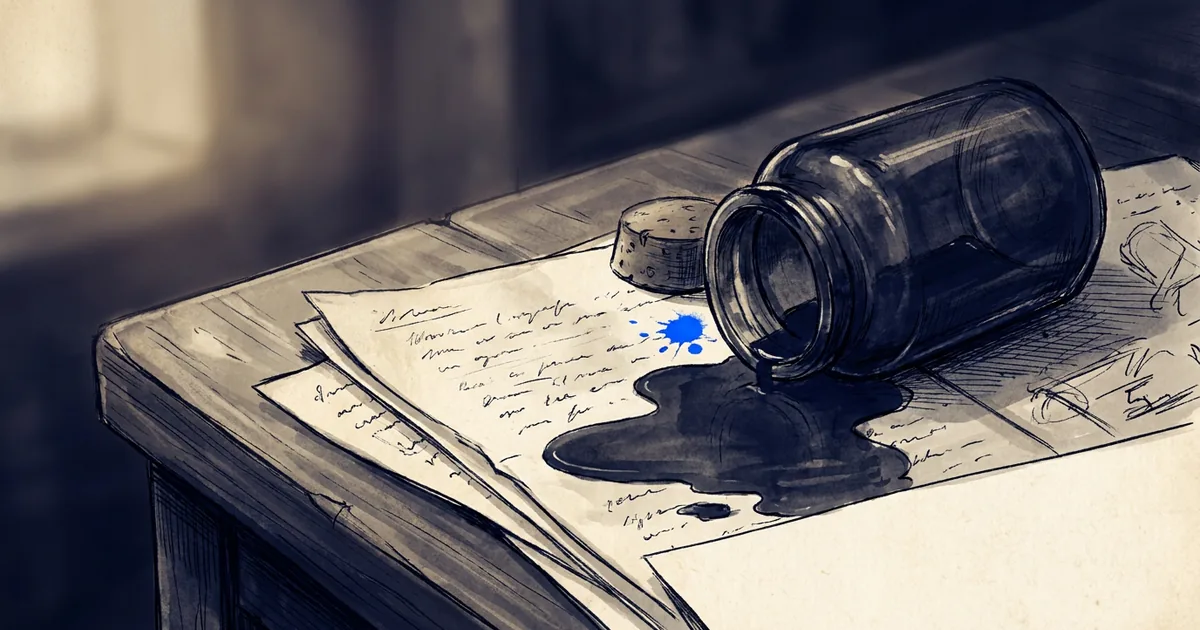
Moving your manuscript into a separate proofreading application costs the book its unique voice. Because disconnected tools lack the context of your story, they flag stylistic choices as errors. This drains the momentum out of your revision and flattens your prose into generic, standardized sentences.
The Gradual Erasure of Personal Style
As we explored in Part 1, treating your drafting workspace and your editing tools as two different worlds creates a dangerous gap. The most severe casualty of that gap is your writing voice. Every writer has a unique rhythm on the page, and protecting that rhythm is what separates memorable books from forgettable ones.
You might lean on short, punchy fragments to build tension during a chase scene. You might use sprawling, lyrical sentences when describing a barren landscape. This rhythm is what makes your book sound like you. But when you lift those pages and drop them into a disconnected grammar checker, that rhythm is immediately under attack by rules built for corporate emails and academic essays.
Isolated tools evaluate text against a generic standard. They do not know what genre you are writing, let alone the specific aesthetic you are aiming for. They will suggest breaking up your lyrical descriptions for readability. They will flag your punchy fragments as incomplete sentences. What a borrowed voice costs a book is the slow erasure of its personality. If you accept enough of these suggestions just to clear the screen of red lines, your novel begins to sound exactly like everyone else's.
Your voice is a promise to the reader. When you surrender it to tools that do not understand fiction, you dilute the very reason people pick up your book.
Drowning in False Positives
The cost to your voice is matched only by the cost to your forward momentum. Finishing a book requires sustained, focused energy. We know from our own data that writers thrive in 34-minute average sessions (July 2026). When you enter an editing phase, you want those precious minutes spent sharpening your argument, deepening the emotion, and tightening the pacing of the scene.
Instead, a disconnected editing tool forces you to spend that time acting as a filter. You have to manually review and dismiss hundreds of false positives. You click "ignore" on your protagonist's slang. You click "ignore" on the fictional currency you invented. You click "ignore" on the stylistic repetition you used for dramatic effect. The burden of managing the software outweighs the joy of improving the story.
This exhaustion is why so many writers stall out during the revision process, struggling to finish your novel. The friction of defending your own manuscript against a tool that is supposed to be helping you simply becomes too high, and the manuscript goes back in the drawer. The momentum that carried you through the drafting phase completely evaporates.
The Loop That Destroys Context
When your tools are fragmented, your revision loop is entirely broken. You spot a structural problem while running a grammar check, but you cannot fix it there because your character bibles and world-building notes are in another application. So you switch tabs. You look up the reference. You make the structural change in your main drafting app, but now you have to re-export that section back to the proofreader.
This endless loop destroys context. Writers lose track of which file is the current master version. Edits made in one place do not cascade to the other. The cognitive load of maintaining parity between the place where the story lives and the place where the sentences are polished is enormous, and it steals energy directly from the creative process. You end up reading the same paragraphs six times across three different screens.
The alternative is not to abandon editing altogether, but to refuse to export the draft in the first place. A real answer requires a workspace where the editing tools actually understand the book they are looking at. We will look at exactly how to build that setup in Part 3.
- Part 1: Why We Separate Drafting from Proofing (And Why It Fails)
- Part 2: What Exporting Your Draft Costs Your Voice and Momentum
- Part 3: How to Choose Writing Editing Software That Protects Your Voice
Questions writers ask
Why do standalone grammar tools ruin my writing style?
Standalone grammar tools are built to enforce standardized, often corporate, English. They evaluate sentences in total isolation and do not account for creative choices like fragmented dialogue, deliberate repetition, or genre-specific pacing. Following their advice blindly can flatten your unique voice into generic prose that sounds like a textbook rather than a novel.
What is a false positive in editing?
A false positive occurs when an editing tool flags a correct or intentional piece of writing as an error. For fiction writers, this happens constantly with made-up names, regional dialects, and stylistic sentence fragments, forcing the writer to manually dismiss the warnings rather than doing actual creative work.
How does exporting my draft kill my writing momentum?
Exporting forces you to manage multiple versions of your manuscript across different interfaces. Instead of staying immersed in the flow of the story, you spend your writing session moving text around, re-entering custom dictionary terms, and trying to remember which document contains the most recent edits. This administrative work consumes the energy you need to finish the book.