A fragmented workflow taxes your manuscript in three ways: it drains your writing momentum, degrades your story's continuity, and flattens your unique voice. When your notes, drafts, and proofing tools live in different places, the sheer administrative burden of moving text between them quietly consumes the energy meant for creating.
The Friction of the Blank Text Box
In Part 1, we looked at why assembling a sprawling toolchain creates a false sense of productivity. Here, we need to look at what that toolchain actually costs you when you sit down to write. The first and most immediate cost is paid in momentum.
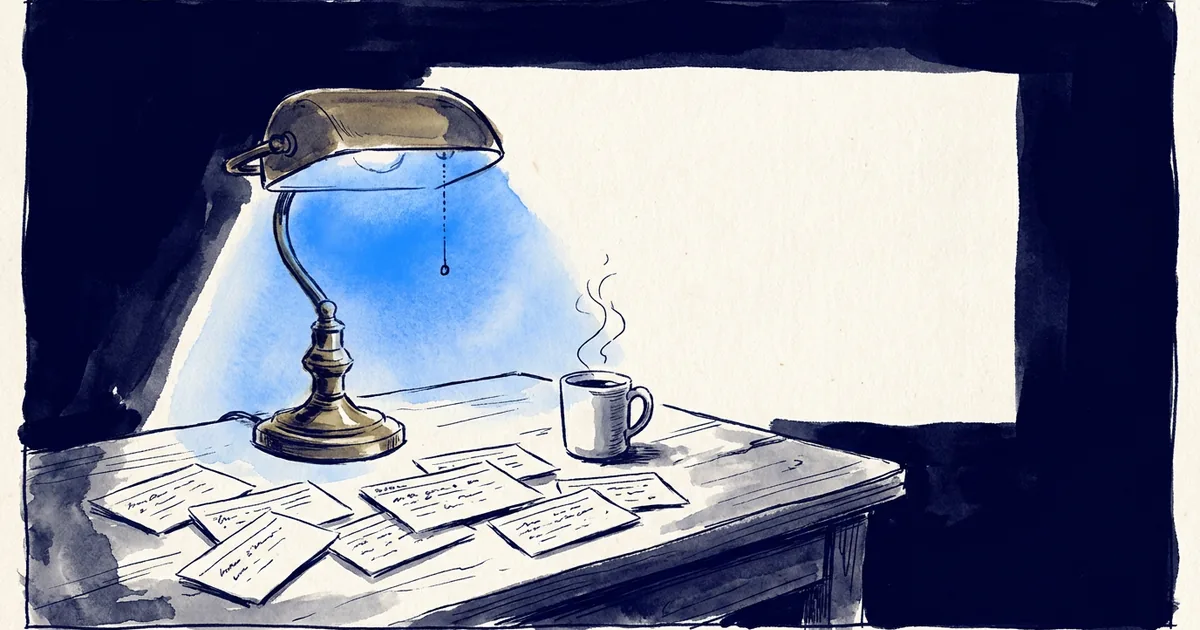
When your manuscript is spread across a note-taking application, a timeline viewer, and a separate drafting environment, the simple act of starting a session becomes a heavy lift. You cannot just open the document and type. You must first rebuild the context of the story in your mind. You open your outline to see what needs to happen. You read your character dossier to recall the emotional stakes. Finally, you open your word processor and stare at the blinking cursor.
Because the drafting environment knows absolutely nothing about the notes you just read, it offers no continuity. The text box is entirely isolated from the story world. Every time you step away from the keyboard and return, you pay a re-entry tax. Over a six-month drafting process, this friction quietly wears down your enthusiasm, turning what should be a creative pursuit into an exercise in data retrieval.
How Geography Breaks Continuity
The second cost of a scattered workflow is paid by the narrative itself. A novel is a massive, complex structure built on thousands of dependent variables. If a character injures their left hand in chapter three, they cannot easily open a heavy jar in chapter nineteen. Maintaining that truth requires either a perfect memory or a system that actively holds the information alongside the prose.
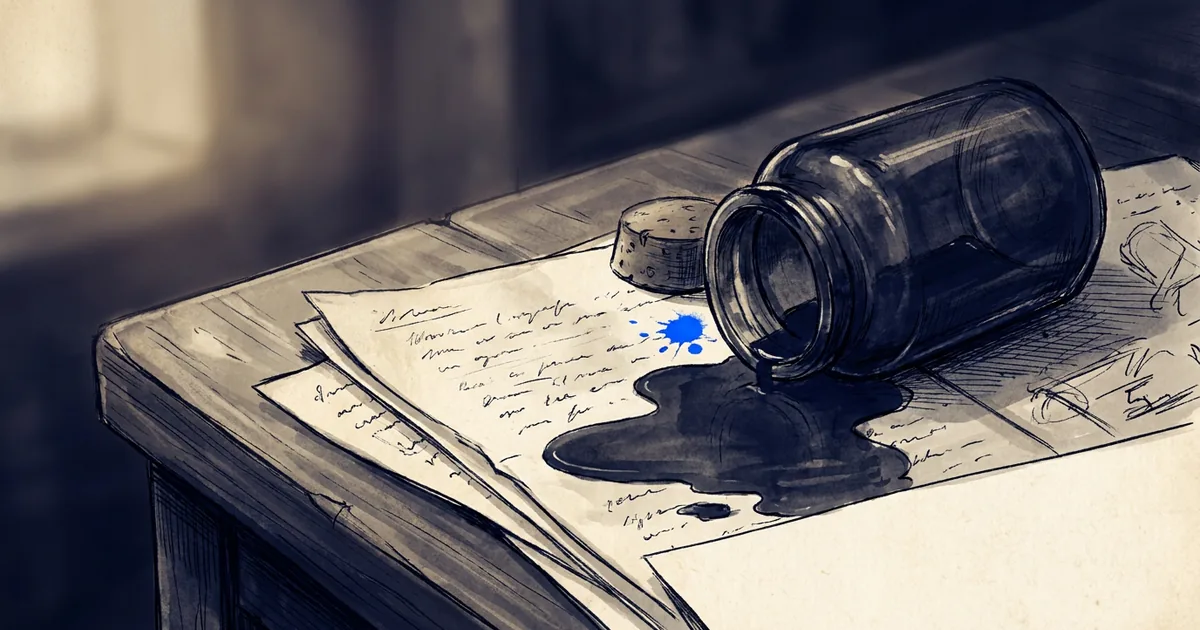
When you rely on disconnected applications, your story's geography works against you. If you realize mid-scene that a character's motivation needs to change, you make the adjustment in the prose. But if you forget to open your external outlining software to log the change, your master plan immediately goes out of sync with your reality. As we noted when examining what exporting your draft costs your voice and momentum, this divergence compounds over time.
Eventually, you end up with an outline that describes a book you are no longer writing, and a draft full of improvised decisions that you can no longer track. The burden of maintaining continuity falls entirely on your working memory, which is already saturated with the demands of choosing the next word.
The Tax on Your Authentic Voice
The final and most damaging cost is levied against your authorial voice. This happens most often when writers attempt to polish their work by moving it out of their drafting environment and into external grammar checkers or standalone proofing tools.
When you paste a chapter into a third-party checker, the software does not read a story. It reads a string of data to be measured against a generic set of corporate communication rules. It will flag your deliberate sentence fragments as errors. It will highlight your character's distinct dialect as improper grammar. It will suggest flattening your rhythmic, soaring descriptions into brief, efficient bullet points.
Faced with a screen full of red underlines, the temptation to accept the suggestions and clear the warnings is overwhelming. If you yield to it, your prose becomes technically correct but entirely beige. The unique cadence that makes your writing belong to you is gradually erased. If you want to overcome editing overwhelm without sacrificing your style, you cannot rely on tools that treat literature like a business memo.
Continue reading the series:
- Part 1: Why Assembling a Toolchain Breaks Your Writing Momentum
- Part 2: The Quiet Cost of Moving Your Manuscript Between Apps
- Part 3: Finding Software for Writing a Book That Holds Everything
Questions writers ask
Why do I lose my writing voice when I export my draft?
You lose your writing voice because standalone grammar and proofing tools are designed to enforce standard, generic rules of communication. They cannot recognize your deliberate stylistic choices, so they encourage you to flatten your prose until it sounds technically correct but entirely devoid of personality.
How much time does app-switching really cost a writer?
The true cost of app-switching is measured in focus rather than just seconds. While it only takes a moment to click from a drafting tool to a character spreadsheet, rebuilding the creative immersion required to write a compelling scene can take ten to twenty minutes after an interruption.
Is it normal to abandon a draft halfway through?
It is incredibly common, and it is rarely due to a lack of talent. Most abandoned drafts collapse under the weight of disorganized files and lost context. When the administrative burden of figuring out where the story left off becomes greater than the joy of writing it, the manuscript stalls.