
Daily writing sprints with other writers online replace the friction of solitary drafting with shared momentum. Sitting down at a set time with fellow authors provides the structure you need to start. You retain your private focus, but the collective energy carries you through the hardest chapters.
Replacing Internal Pressure With a Reliable Schedule
As we saw in Part 1 and Part 2, attempting to finish a long manuscript in total isolation eventually drains your energy. The solution is not to apply more internal pressure, but to change the environment entirely. You need a space where the start time is decided for you, where the boundary of the session is clear, and where you are not the only person staring at a blank page.
A proper writing sprint changes the dynamic immediately. You do not have to negotiate with yourself about when to start. The clock dictates the beginning, and the presence of fellow writers creates a quiet, focused anchor. You show up, you settle in, and the work begins naturally. The decision fatigue of wondering if you should write today disappears because the schedule is already set.
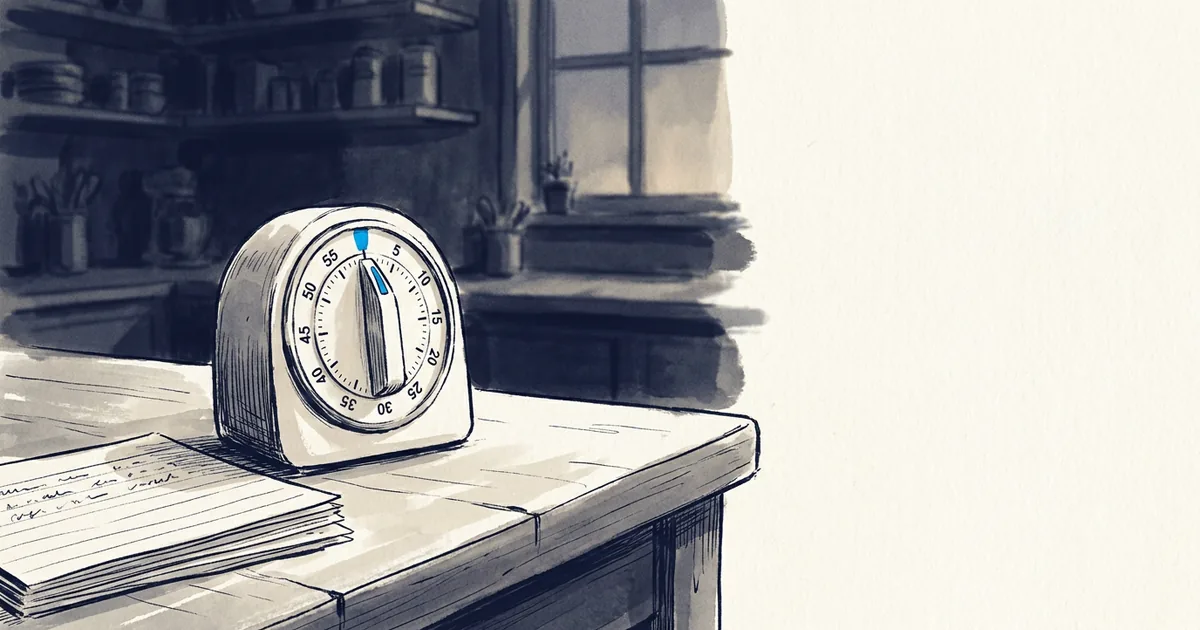
Notice how different it feels to write when a timer is running alongside other people. The commitment shifts from a vague promise to yourself into a concrete, scheduled appointment that you simply attend.
The Mechanics of a Proper Sprint Session
Not every group setting works for a novel draft. You do not need a noisy chat window, a complicated leaderboard, or the pressure to perform for an audience. You need a dedicated, reliable schedule that respects your privacy while providing the necessary structure to get the work done.
This is exactly why we built The November Room. It provides the rhythm of shared drafting without the distractions of a social feed. The mechanics are built entirely around getting the book finished, focusing on calm presence rather than frantic output.
- A predictable schedule. There are two free 25-minute write-ins a day at 12:00 PM and 8:00 PM New York time. You choose the session that fits your day, and the fixed start time eliminates procrastination.
- A calm arrival. Doors open 10 minutes early. This gives you time to close your tabs, grab a glass of water, and review your notes before the drafting actually begins.
- Private focus, shared timer. There is a shared timer to keep the pace, but each writer stays in their own private manuscript. You are writing together, but your story remains entirely yours. There is no sharing and no critique.
- Zero barriers. The room is free on every plan, with no credit card required to enter. The goal is to remove friction, not add administrative hurdles.
- Enduring support. The schedule runs every day through November and after it. Books are not finished in a single month, and the structure remains in place for as long as your manuscript takes to finish.
Why the Shared Timer Outperforms Word Goals
When you rely on word counts, you focus purely on volume. As we noted earlier, volume metrics often push you to write hollow, generic sentences just to hit the number and close the laptop. A shared timer changes the metric from volume to presence. You are only committing to sitting with your manuscript for twenty-five minutes.
If you spend ten of those minutes figuring out a difficult plot point without typing a word, the session is still a success. You stayed in the chair. You did the work. The timer respects the reality of the drafting process, which often requires thinking just as much as typing.
Reclaiming the Joy of the Finished Book
Write in a Click is the home for authors because we measure success in finished books, not just in daily output. Providing a space to draft quietly alongside peers is part of ensuring that your story actually reaches its final page, protecting your voice along the way.
When you replace the exhaustion of the solitary room with a structured sprint, the prose regains its energy. Your authentic voice returns to the page because you are no longer exhausted by the simple act of starting. You arrive, check the timer, and let the scheduled momentum carry your draft forward to the finish line.
Review the previous parts of this arc:
- Part 1: Why the Silent Writing Room Stops Your Novel
- Part 2: What the Solitary Draft Costs Your Narrative Voice
- Part 3: Daily Writing Sprints With Other Writers Online: The Structural Fix for Stalled Novels
Questions writers ask
Do I have to share my work during a writing sprint?
No, you do not share your work. In a proper sprint room, each writer stays in their own private manuscript. The shared aspect is entirely about the schedule and the timer, ensuring you retain full privacy over your draft.
Why are the sprints exactly 25 minutes long?
A 25-minute block is long enough to achieve deep focus and write several hundred words, but short enough to prevent burnout. Knowing the session has a clear end point makes it much easier to begin.
What happens after the sprint timer ends?
When the timer ends, the formal session closes. You can choose to step away from the desk with a sense of completion, or, if you have caught the rhythm, you can continue writing on your own momentum.